


15 Must-Have Accessories Every Photographer Should Own in 2026

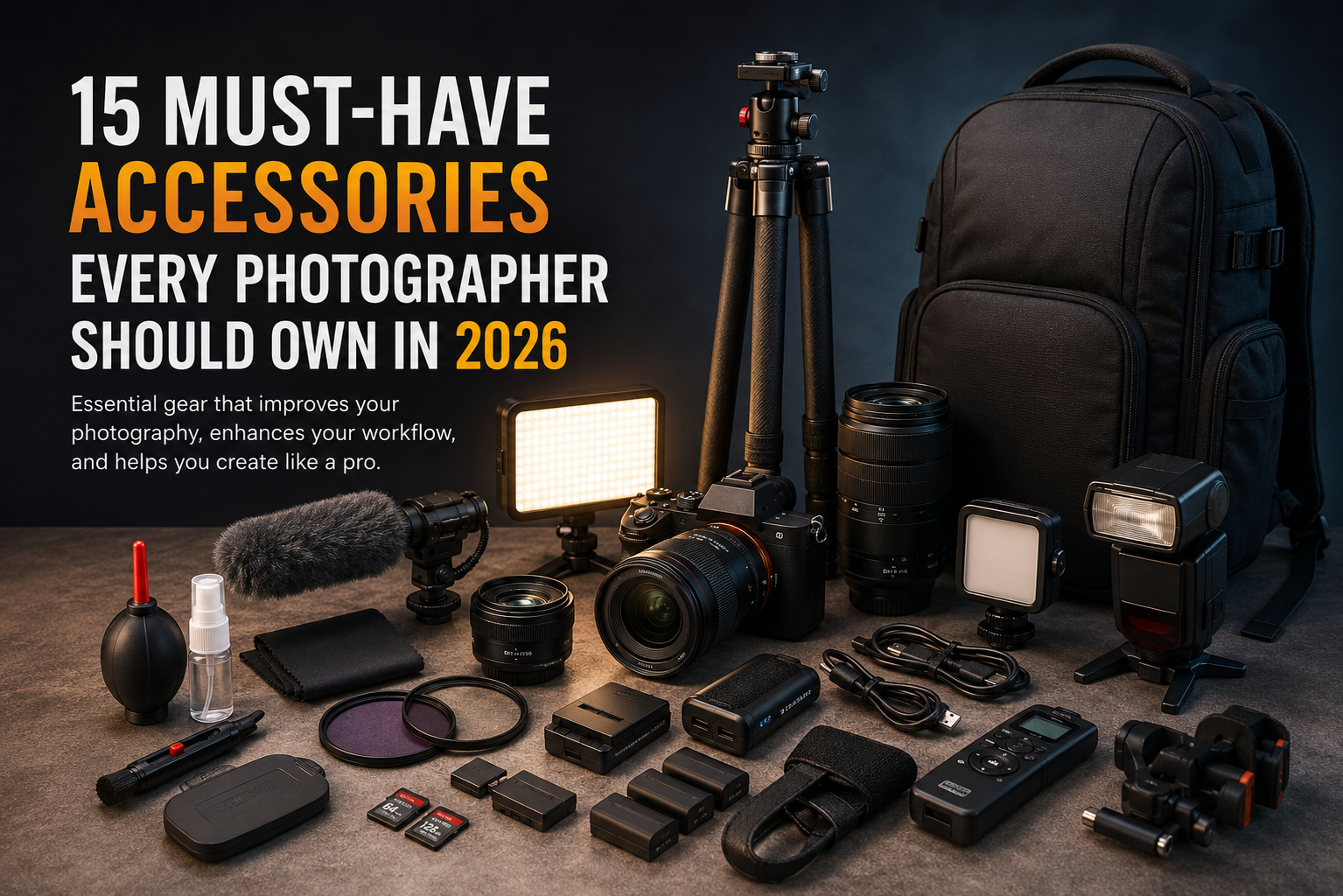
15 Must-Have Accessories Every Photographer Should Own in 2026
Photography has never been more accessible than it is today.
A beginner can start with a smartphone. A content creator can build an entire studio inside a bedroom. A wedding photographer can deliver cinematic edits from a mirrorless camera smaller than old DSLRs. A travel creator can carry an entire production setup inside a backpack.
But despite all this technological progress, one truth still remains unchanged.
Great photography is never only about the camera.
The camera is simply the foundation.
The real magic often comes from the accessories surrounding it.
Professional photographers understand this deeply. They know that lighting shapes emotion. Stability improves sharpness. Audio builds immersion. Filters control atmosphere. Storage protects memories. Support equipment improves workflow. Protection accessories save expensive gear from damage.
Beginners usually discover this the hard way.
Many people invest heavily in camera bodies while ignoring accessories completely. Then they wonder why their images still look average, why videos appear shaky, why audio sounds hollow, or why lighting feels unprofessional.
In reality, accessories are what transform equipment into a complete creative system.
Whether someone shoots weddings, wildlife, fashion, products, YouTube videos, Instagram reels, podcasts, travel vlogs, or cinematic films, certain accessories are universally valuable.
These are not luxury purchases.
They are practical tools that improve quality, efficiency, consistency, and professionalism.
This article explores the 15 most important camera accessories every photographer should own in 2026. It explains what they do, why they matter, how professionals use them, and how beginners can choose the right options without wasting money.
With more than 80 years connected to the photography and imaging ecosystem, Digiphoto has witnessed the evolution from manual film photography to digital content creation. Across every generation of cameras, one thing has stayed consistent: photographers who invest wisely in accessories consistently produce better results than those who focus only on camera upgrades.
This guide is designed to help creators build smarter setups for modern photography and video production.
1. A Reliable Tripod
If there is one accessory every photographer should own, it is a tripod.
A tripod may not look exciting compared to cameras or lenses, but it is one of the most important tools in photography.
Sharpness matters.
Even the slightest hand movement can reduce image clarity, especially in low light. A tripod eliminates camera shake and creates stable compositions.
Professional photographers use tripods constantly for:
- Landscape photography
- Product photography
- Long exposure photography
- Studio work
- Night photography
- Architectural photography
- Group portraits
- Video recording
- YouTube production
Why Beginners Ignore Tripods
Many beginners believe tripods are only for professionals or studio environments.
That is completely incorrect.
Modern content creation depends heavily on stability.
Even smartphone creators use tripods for:
- Reels
- Interviews
- Tutorials
- Streaming
- Product videos
Features to Look For
A good tripod should offer:
- Strong stability
- Adjustable height
- Durable locking mechanisms
- Good load capacity
- Lightweight portability
- Smooth head movement
Cheap tripods often become frustrating because they wobble, loosen over time, or fail under heavier cameras.
A reliable tripod is a long-term investment.
2. LED Video Light
Photography literally means “painting with light.”
Without proper lighting, even expensive cameras struggle.
That is why LED lights have become one of the most essential accessories in modern photography and content creation.
Why LED Lights Matter
LED lights improve:
- Exposure
- Color accuracy
- Mood
- Facial appearance
- Detail visibility
Modern LED systems are used for:
- YouTube videos
- Portrait photography
- Product photography
- Podcast setups
- Streaming
- Commercial shoots
- Reels
- Wedding videography
Advantages of LED Lighting
Unlike older lighting systems, LED lights offer:
- Low heat generation
- Adjustable brightness
- Energy efficiency
- Portability
- Long lifespan
Many modern lights also include:
- RGB color modes
- Mobile app controls
- Battery operation
- Adjustable color temperatures
Lighting is often the single biggest upgrade a creator can make.
3. External Flash
Natural light is beautiful, but it is not always reliable.
Professional photographers need lighting control.
That is where external flashes become essential.
Why Built-In Flash Is Not Enough
Built-in flashes are limited because:
- They produce flat lighting
- They create harsh shadows
- They lack power
- They cannot bounce effectively
External flashes provide:
- More power
- Better direction control
- Bounce lighting
- Wireless triggering
- Professional lighting flexibility
Common Uses
External flashes are extremely important for:
- Wedding photography
- Indoor events
- Fashion photography
- Portrait sessions
- Event photography
Professional wedding photographers almost always carry multiple flashes.
4. Extra Batteries
Battery anxiety is real.
Modern mirrorless cameras consume power quickly, especially during:
- 4K recording
- Continuous autofocus
- High brightness usage
- Long shoots
Nothing is more frustrating than a dead battery during an important moment.
Why Spare Batteries Matter
Extra batteries are essential for:
- Weddings
- Outdoor shoots
- Travel photography
- Long events
- Commercial productions
Professionals rarely trust a single battery.
Power Backup Has Become More Important in 2026
Modern creators increasingly use:
- USB-C charging
- Power banks
- Battery grips
- Fast chargers
Reliable power management improves workflow significantly.
5. High-Speed Memory Cards
Photography without storage is impossible.
But surprisingly, many beginners purchase poor-quality memory cards.
That creates major problems.
Why Memory Card Quality Matters
Slow cards can cause:
- Video recording failures
- Camera freezing
- Slow buffer clearing
- Data corruption
Modern Content Demands Faster Storage
Today’s cameras record:
- 4K video
- 6K video
- RAW images
- High-speed bursts
These workflows require fast cards.
Important Things to Check
- Read speed
- Write speed
- Storage capacity
- Brand reliability
- Video compatibility ratings
Professionals prioritize reliable storage because losing files can destroy entire projects.
6. Camera Bag
Photography equipment is expensive.
Proper protection matters.
A camera bag is not just for carrying gear. It protects equipment from:
- Dust
- Rain
- Impacts
- Scratches
- Moisture
Types of Camera Bags
Backpack Style
Ideal for:
- Travelers
- Outdoor photographers
- Wedding photographers
Sling Bags
Ideal for:
- Street photography
- Fast access
Hard Cases
Ideal for:
- Airline travel
- Professional transportation
Important Features
Good camera bags should offer:
- Waterproof material
- Padded protection
- Organized compartments
- Comfortable carrying support
Professionals often consider bags as important as the camera itself.
7. Lens Filters
Lens filters are among the most misunderstood accessories in photography.
Many beginners believe filters are unnecessary.
Professionals know otherwise.
UV Filters
Used mainly for:
- Lens protection
- Dust prevention
- Scratch protection
CPL Filters
Circular polarizers help:
- Reduce reflections
- Improve sky colors
- Enhance contrast
Landscape photographers use CPL filters extensively.
ND Filters
Neutral Density filters reduce incoming light.
They are essential for:
- Cinematic video
- Long exposure photography
- Waterfall shots
- Motion blur effects
Modern filmmakers depend heavily on ND filters.
8. Camera Cleaning Kit
Photography equipment attracts dust constantly.
Dirty lenses reduce image quality.
Dusty sensors create unwanted spots.
Regular maintenance keeps equipment performing properly.
Essential Cleaning Tools
Every photographer should own:
- Air blower
- Microfiber cloth
- Cleaning solution
- Sensor cleaning tools
- Lens brush
Why Maintenance Matters
Proper cleaning:
- Protects image quality
- Extends equipment lifespan
- Prevents expensive repairs
Professionals clean gear regularly because consistency matters.
9. External Microphone
Modern photography and videography are closely connected.
Video content dominates the internet.
And poor audio immediately destroys production quality.
Why Audio Matters
Audiences tolerate average visuals.
They rarely tolerate bad sound.
Types of Microphones
Shotgun Microphones
Best for:
- Camera-mounted audio
- Interviews
- YouTube videos
Lavalier Microphones
Best for:
- Talking-head videos
- Tutorials
- Presentations
Wireless Systems
Best for:
- Outdoor creators
- Wedding videographers
- Mobile filmmaking
Audio quality dramatically affects professionalism.
10. Gimbal Stabilizer
Shaky footage feels amateur.
Smooth motion feels cinematic.
That is why stabilizers and gimbals have become essential for video creators.
Common Uses
- Wedding films
- Travel videos
- Reels
- Commercial shoots
- Real estate videos
Smartphone Gimbals
Mobile creators heavily rely on compact gimbals.
Camera Gimbals
Professional filmmakers use advanced stabilization systems for cinematic movement.
Stabilization transforms production quality instantly.
11. Softbox or Diffuser
Harsh light creates harsh shadows.
Soft light creates flattering visuals.
That is why photographers use diffusers and softboxes.
Why Soft Light Matters
Soft lighting improves:
- Skin tones
- Portraits
- Product photography
- Interviews
Softboxes Are Essential For
- Studio setups
- Product shoots
- Fashion photography
- Commercial work
Even beginners notice dramatic improvement when using diffused light.
12. Light Stand
Lighting equipment needs stable support.
Light stands are often overlooked but extremely important.
Uses of Light Stands
They support:
- LED lights
- Softboxes
- Reflectors
- Ring lights
Professional setups depend heavily on stable stands.
Weak stands become dangerous and unreliable.
13. Reflector
Reflectors are simple but powerful.
They bounce light back onto the subject.
Why Reflectors Matter
Reflectors improve:
- Facial lighting
- Contrast balance
- Outdoor portraits
Common Reflector Colors
Silver
Creates brighter reflection.
Gold
Adds warm tones.
White
Creates softer fill light.
Reflectors are affordable yet extremely effective.
14. Mobile Creator Accessories
Smartphone content creation is now mainstream.
Many creators build successful businesses entirely from mobile setups.
Essential Mobile Accessories
- Mobile tripods
- Smartphone cages
- Wireless microphones
- Portable lights
- Gimbals
- Mobile lenses
Modern smartphones combined with accessories can produce impressive professional content.
15. Portable SSD or Backup Drive
Data loss is one of the worst experiences for photographers.
Memory cards fail.
Drives crash.
Files become corrupted.
That is why backup storage is essential.
Why Backup Matters
Professional creators always maintain multiple copies of important content.
Portable SSD Advantages
- Fast transfer speeds
- Compact size
- Durability
- Reliable workflow
Modern video production generates massive file sizes.
Reliable storage systems protect valuable work.
Why Accessories Matter More Than Camera Upgrades
Many beginners immediately want better cameras.
But professionals often improve results faster by upgrading:
- Lighting
- Stability
- Audio
- Workflow tools
A well-lit image from a mid-range camera often looks better than poorly lit footage from an expensive camera.
That is an important lesson.
Accessories directly affect production quality.
Building the Right Setup for Your Needs
Not every photographer needs every accessory immediately.
Different creators need different tools.
Wedding Photographers
Should prioritize:
- Flashes
- Batteries
- Memory cards
- LED lights
YouTubers
Should prioritize:
- Microphones
- Lighting
- Tripods
- Backdrops
Travel Photographers
Should prioritize:
- Lightweight tripods
- Portable storage
- Compact bags
Product Photographers
Should prioritize:
- Softboxes
- Reflectors
- Stable tripods
Understanding workflow needs prevents unnecessary spending.
Common Mistakes Beginners Make
Buying Cheap Accessories
Low-quality accessories often fail quickly.
Ignoring Lighting
Lighting affects quality more than many camera upgrades.
Overbuying Equipment
Beginners should grow gradually.
Ignoring Audio
Poor sound damages video quality instantly.
Neglecting Protection
Unprotected equipment gets damaged easily.
The Rise of Creator Culture
Photography accessories are no longer only for photographers.
Modern users include:
- Influencers
- Streamers
- Educators
- Coaches
- Businesses
- E-commerce brands
- Online sellers
Content creation has become a global industry.
Accessories now support every part of digital communication.
Why Trusted Brands Matter
Reliable accessories improve:
- Safety
- Consistency
- Performance
- Durability
Professionals avoid unreliable equipment because failures affect clients and reputation.
Choosing quality accessories saves money long-term.
Final Thoughts
Cameras capture images.
Accessories shape results.
That is the reality of modern photography.
The difference between amateur and professional output often comes from:
- Better lighting
- Better stabilization
- Better audio
- Better workflow
- Better preparation
Accessories are not optional extras anymore.
They are essential creative tools.
The good news is that creators no longer need massive studios to produce professional work. With the right accessories, even small setups can achieve impressive results.
Photography today is about creativity, storytelling, and consistency.
And the right tools help creators bring those ideas to life more effectively.
With decades connected to photography equipment, creator workflows, studio setups, and evolving imaging technology, Digiphoto continues supporting photographers and creators across generations by helping them choose practical accessories designed for real-world creative demands.
Frequently Asked Questions
1. What is the most important accessory every photographer should buy first?
A tripod is often the best first accessory because it improves stability, sharpness, and shooting flexibility.
2. Why are LED lights better than traditional lighting?
LED lights generate less heat, consume less power, and offer adjustable brightness and color temperature.
3. Do beginners really need external flashes?
Yes. External flashes provide much better lighting control than built-in camera flashes.
4. How many memory cards should photographers carry?
Professionals usually carry multiple cards for backup and workflow safety.
5. Are cheap tripods worth buying?
Very cheap tripods often become unstable and unreliable over time.
6. Why is audio important for video creators?
Poor audio reduces viewer engagement and makes videos feel unprofessional.
7. What is the purpose of a CPL filter?
CPL filters reduce reflections and improve outdoor colors and contrast.
8. Do smartphone creators need accessories too?
Absolutely. Accessories dramatically improve mobile video and photography quality.
9. How often should camera equipment be cleaned?
Basic cleaning should happen regularly, especially after outdoor or dusty shoots.
10. Why do professionals use multiple batteries?
Professional shoots can last many hours, and dead batteries can interrupt important moments.
11. What is the benefit of using softboxes?
Softboxes create softer and more flattering light with reduced harsh shadows.
12. Why are portable SSDs important?
They provide fast, reliable backup storage for photos and videos.
13. Should beginners buy all accessories immediately?
No. It is better to start with essentials and upgrade gradually.
14. Are ring lights good for photography?
Yes. Ring lights work especially well for portraits, beauty content, and video creation.
15. What makes a camera bag important?
Camera bags protect expensive equipment from dust, moisture, impacts, and scratches.