

DSLR vs Mirrorless Camera Accessories: What Changes in 2026?

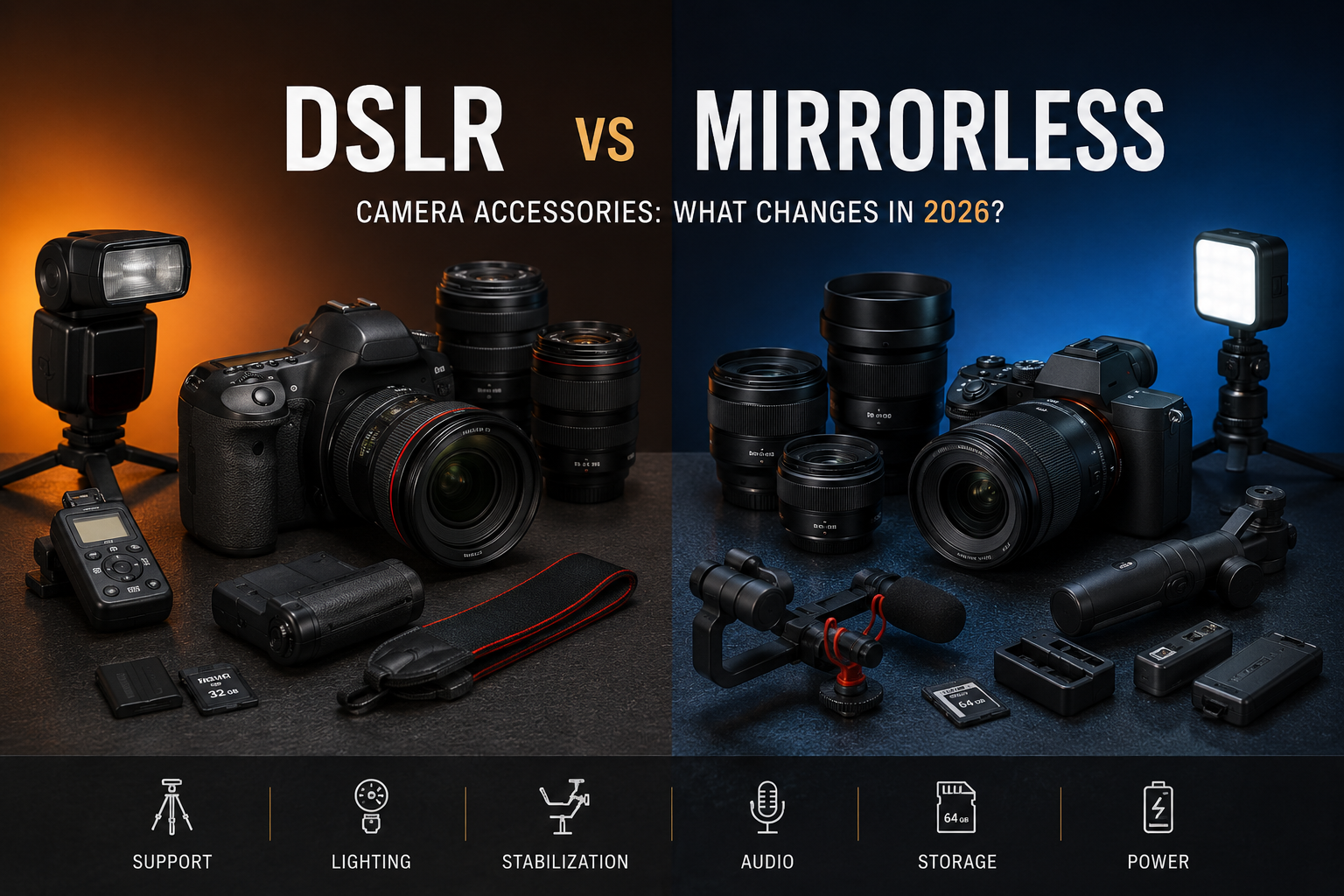
DSLR vs Mirrorless Camera Accessories: What Changes in 2026?
The photography industry has changed dramatically over the last decade.
For years, DSLRs dominated professional photography. Wedding photographers trusted them. Wildlife photographers carried them into forests and mountains. Studio professionals built entire businesses around them. DSLR cameras became the standard definition of professional photography equipment.
Then mirrorless cameras arrived.
At first, many photographers ignored them. Some considered them too small, too slow, or too unreliable for professional work. But technology evolved rapidly. Autofocus systems improved. Battery performance increased. Electronic viewfinders became more advanced. Video capabilities expanded dramatically.
Today, mirrorless cameras dominate modern photography conversations.
From YouTubers and travel creators to wedding professionals and commercial filmmakers, creators around the world are moving toward mirrorless systems because of their compact size, advanced autofocus, powerful video features, and portability.
But this shift has also created confusion.
Many beginners entering photography today ask important questions:
Do DSLR accessories work with mirrorless cameras?
Should creators buy different tripods, flashes, or stabilizers?
What changes when moving from DSLR to mirrorless?
Which accessories matter more for mirrorless setups?
Can photographers still invest confidently in DSLR equipment in 2026?
These questions are extremely important because accessories often represent a major long-term investment. Cameras may change every few years, but good accessories remain useful for much longer.
This article explains the real differences between DSLR and mirrorless camera accessories in 2026. It explores compatibility, workflow changes, lighting systems, stabilization tools, audio equipment, storage needs, creator setups, and buying decisions for both beginners and professionals.
Whether someone is upgrading from DSLR to mirrorless, buying their first camera system, or building a creator setup from scratch, understanding these accessory differences helps avoid expensive mistakes.
With more than 80 years connected to photography equipment, creator workflows, and imaging technology, Digiphoto has witnessed every major transition in the industry—from film cameras to digital imaging, from bulky studio systems to compact creator setups, and now from DSLR dominance to the rapid rise of mirrorless ecosystems.
The goal of this guide is not to promote one system over the other.
The goal is to help creators understand how accessories evolve alongside camera technology.
Understanding the Core Difference Between DSLR and Mirrorless Cameras
Before discussing accessories, it is important to understand how DSLR and mirrorless cameras differ fundamentally.
What Is a DSLR Camera?
DSLR stands for Digital Single-Lens Reflex.
These cameras use:
- A mirror mechanism
- An optical viewfinder
- Mechanical shutter systems
When light enters the lens, it reflects through a mirror into the optical viewfinder. When the shutter button is pressed, the mirror flips upward and the image is captured.
DSLR systems became extremely popular because they offered:
- Excellent battery life
- Strong lens ecosystems
- Reliable autofocus
- Durable professional bodies
For years, DSLR cameras were the gold standard for photography.
What Is a Mirrorless Camera?
Mirrorless cameras remove the mirror mechanism entirely.
Instead of optical viewfinders, they use:
- Electronic viewfinders (EVF)
- Digital sensor previews
- Real-time display systems
Because there is no mirror box, mirrorless cameras are generally:
- Smaller
- Lighter
- More compact
Modern mirrorless systems also provide:
- Advanced autofocus
- Better video features
- Faster eye tracking
- Real-time exposure previews
- Silent shooting modes
These technological changes directly affect accessory choices.
Why Accessories Matter More Than Camera Bodies
Many beginners focus heavily on camera bodies while ignoring accessories.
Professionals understand the opposite.
Accessories often have a greater impact on workflow and final output than camera upgrades themselves.
For example:
- Good lighting improves image quality dramatically
- Stabilization improves sharpness
- Better audio improves video professionalism
- Proper storage prevents data loss
- Comfortable rigs improve long shooting sessions
Whether using DSLR or mirrorless cameras, accessories shape the real shooting experience.
But mirrorless technology has changed how creators choose those accessories.
Tripods: Do DSLR and Mirrorless Cameras Need Different Tripods?
Tripods remain essential for both systems.
However, mirrorless cameras have changed tripod preferences significantly.
DSLR Tripod Requirements
Traditional DSLR setups are usually:
- Larger
- Heavier
- More front-heavy
Professional DSLR bodies combined with large lenses create substantial weight.
Because of this, DSLR users often prefer:
- Heavy-duty tripods
- Stronger ball heads
- Higher load capacities
Wedding photographers and wildlife photographers using DSLR systems traditionally relied on sturdy aluminum or carbon fiber tripods.
Mirrorless Camera Tripod Preferences
Mirrorless systems are generally lighter.
This creates several advantages:
- Easier portability
- Compact travel setups
- Smaller support systems
Modern mirrorless creators often prioritize:
- Lightweight travel tripods
- Compact folding systems
- Portable creator rigs
Travel photographers especially appreciate the reduced carrying weight.
However, professionals using large telephoto mirrorless lenses still require strong tripods.
The key difference is portability.
Mirrorless creators often choose accessories designed for mobility and content creation.
Camera Bags: Compact Systems Change Carrying Styles
One of the biggest practical differences between DSLR and mirrorless setups involves camera bags.
DSLR Camera Bags
DSLR kits typically require:
- Larger compartments
- Heavier padding
- Bigger storage space
Professional DSLR setups often include:
- Multiple lenses
- External flashes
- Battery grips
- Large telephoto lenses
This increases bag size considerably.
Mirrorless Camera Bags
Mirrorless systems allow photographers to:
- Carry lighter bags
- Travel more efficiently
- Build minimalist creator kits
This has led to growing popularity of:
- Sling bags
- Compact backpacks
- Creator shoulder bags
Modern creators often prefer lightweight portability over large heavy setups.
Battery Accessories: One of the Biggest Differences
Battery performance represents one of the most important differences between DSLR and mirrorless systems.
DSLR Battery Life
DSLR cameras traditionally offer excellent battery performance because optical viewfinders consume very little power.
Many DSLR cameras can shoot:
- 1000+
- 1500+
- Even 2000+ photos per charge
This makes DSLR systems highly reliable for long events.
Mirrorless Battery Challenges
Mirrorless cameras consume more power because:
- Electronic viewfinders remain active
- LCD displays constantly operate
- Advanced autofocus systems run continuously
As a result, mirrorless users often require:
- Multiple spare batteries
- USB-C charging solutions
- Power banks
- Fast charging systems
Battery accessories are far more important for mirrorless workflows.
Professional mirrorless shooters rarely attend events without several backup batteries.
Lighting Accessories: Similar Tools, Different Workflows
Lighting remains essential for both DSLR and mirrorless systems.
But mirrorless technology has influenced lighting workflows significantly.
LED Lighting Growth in Mirrorless Content Creation
Mirrorless cameras became extremely popular among:
- YouTubers
- Streamers
- Reels creators
- Filmmakers
- Hybrid shooters
Because of this, continuous lighting systems gained popularity.
Modern mirrorless creators heavily use:
- LED panels
- RGB lights
- Portable creator lights
- Compact studio lighting
These systems work especially well for video production.
DSLR Flash-Centered Workflows
Traditional DSLR photography focused heavily on flash photography.
Wedding photographers commonly used:
- Speedlights
- Wireless flash triggers
- Studio strobes
DSLR systems still perform excellently with flash setups.
However, mirrorless creators often lean more toward hybrid lighting workflows combining:
- Continuous LEDs
- Portable RGB systems
- Soft cinematic lighting
Autofocus and Gimbal Accessories
Mirrorless cameras revolutionized autofocus technology.
Modern systems now offer:
- Eye tracking
- Face tracking
- Subject recognition
- AI autofocus systems
This dramatically improved gimbal workflows.
Why Mirrorless Cameras Dominate Gimbals
Mirrorless systems are:
- Smaller
- Lighter
- Easier to balance
That makes them ideal for:
- Handheld filmmaking
- Reels
- Cinematic movement
- Travel videos
Modern gimbals are heavily optimized for mirrorless systems.
DSLR cameras can still work on gimbals, but balancing becomes more difficult due to size and weight.
Audio Accessories: The Rise of Hybrid Creators
DSLR cameras originally focused mainly on photography.
Mirrorless cameras accelerated the growth of hybrid creators who shoot both photo and video.
Because of this, audio accessories became far more important.
Modern Mirrorless Audio Setups
Mirrorless creators frequently use:
- Wireless microphones
- Shotgun microphones
- Audio interfaces
- USB-C audio adapters
Video-focused creators prioritize audio quality heavily.
Modern creator setups often include:
- External monitors
- Audio receivers
- Portable recorders
- Streaming microphones
The growth of YouTube, podcasts, and creator culture pushed audio accessories into mainstream photography workflows.
Lens Accessories and Adapters
Lens compatibility became a major topic during the DSLR-to-mirrorless transition.
DSLR Lens Ecosystems
DSLR systems built massive lens libraries over decades.
Photographers invested heavily in:
- Canon EF lenses
- Nikon F-mount lenses
- DSLR third-party lenses
Mirrorless Lens Evolution
Mirrorless systems introduced:
- New mounts
- Smaller lens designs
- Faster autofocus motors
Many photographers worried about losing lens investments.
That is where lens adapters became extremely important.
Lens Adapters
Adapters allow DSLR lenses to work on mirrorless cameras.
This helped photographers transition gradually without replacing every lens immediately.
However:
- Autofocus performance may vary
- Size increases slightly
- Balance changes
Many creators still successfully use DSLR lenses on mirrorless bodies today.
Memory Cards and Storage Needs
Modern mirrorless cameras often demand faster storage systems.
Why?
Because they increasingly support:
- 4K video
- 6K video
- 8K recording
- High frame rates
- RAW video workflows
This increases storage requirements significantly.
Mirrorless creators often prioritize:
- High-speed SD cards
- CFexpress cards
- Portable SSD storage
DSLR workflows may require less aggressive storage speeds depending on shooting style.
Creator Accessories: Mirrorless Changed the Industry
Mirrorless cameras helped transform photographers into creators.
That single shift changed the entire accessory market.
Modern Creator Accessories Include
- RGB lights
- Compact tripods
- Wireless mics
- Portable monitors
- Streaming gear
- Smartphone integration tools
- USB-C hubs
- Mobile creator rigs
Traditional DSLR photography focused more on photography-only workflows.
Mirrorless ecosystems now support:
- Photography
- Video
- Streaming
- Podcasting
- Social media content
This expanded accessory demand dramatically.
Studio Setups: DSLR vs Mirrorless
Both systems work excellently in studios.
However, mirrorless cameras introduced new advantages.
Mirrorless Studio Advantages
Electronic viewfinders provide:
- Real-time exposure preview
- White balance preview
- Focus assistance
This speeds up workflow significantly.
Many studio photographers now use:
- Tethered shooting setups
- Wireless controls
- App-connected lighting systems
Modern accessories increasingly integrate digitally with mirrorless ecosystems.
Travel Photography Accessories
Travel creators strongly influenced the rise of mirrorless systems.
Why Travelers Prefer Mirrorless
- Smaller size
- Reduced weight
- Easier portability
Travel accessories now focus heavily on:
- Compact tripods
- Lightweight bags
- Portable SSDs
- USB-C charging
- Foldable creator setups
Mirrorless systems support mobility exceptionally well.
Heat Management Accessories
Modern mirrorless cameras offer advanced video features.
But high-performance video recording creates heat.
This created demand for:
- Cooling accessories
- External power systems
- Video rigs
- Cage systems
Video creators increasingly use:
- Camera cages
- Cooling fans
- External monitors
DSLR systems historically focused less on intensive video workflows.
Are DSLR Accessories Becoming Obsolete?
This is a common fear.
The answer is no.
Many DSLR accessories remain highly valuable:
- Tripods
- Lighting
- Audio gear
- Filters
- Bags
- Cleaning kits
Most core photography accessories remain universal.
However, some workflows are shifting toward mirrorless optimization.
Should Beginners Buy DSLR or Mirrorless in 2026?
This depends on:
- Budget
- Goals
- Shooting style
- Content needs
DSLR Advantages
- Lower cost
- Great battery life
- Strong used market
- Reliable photography performance
Mirrorless Advantages
- Better autofocus
- Smaller size
- Advanced video features
- Modern creator support
Most modern content creators lean toward mirrorless systems because they support hybrid workflows better.
The Future of Camera Accessories
The future of photography accessories is moving toward:
- Wireless integration
- AI tracking
- USB-C ecosystems
- Compact creator setups
- Cloud-connected workflows
Mirrorless systems are accelerating these trends.
But photography fundamentals remain unchanged.
Creators still need:
- Good lighting
- Stable support
- Reliable audio
- Safe storage
- Comfortable workflows
Accessories will always remain essential.
Final Thoughts
The DSLR versus mirrorless debate often becomes emotional.
But the reality is simpler.
Both systems are capable of producing professional results.
The bigger difference often comes from how creators use accessories around those cameras.
Mirrorless systems changed the photography industry by making professional-quality content creation:
- Smaller
- Faster
- More portable
- More video-focused
That evolution changed accessory preferences significantly.
Modern creators now prioritize:
- Lightweight gear
- Hybrid workflows
- Portable studios
- Video-friendly accessories
- Mobile production systems
But great photography still depends on understanding light, composition, stability, and storytelling—not just camera technology.
The right accessories help creators bring those creative ideas to life more effectively.
With decades connected to photography equipment, creator workflows, studio lighting systems, and evolving imaging technology, Digiphoto continues supporting photographers, videographers, and content creators across generations by helping them build practical setups designed for modern creative demands.
Frequently Asked Questions
1. Can DSLR accessories work with mirrorless cameras?
Many accessories like tripods, lights, microphones, and bags work with both systems. Some lenses may require adapters.
2. Are mirrorless cameras better for video creators?
Yes. Mirrorless cameras generally offer better autofocus, compact size, and advanced video features.
3. Why do mirrorless cameras need more batteries?
Electronic viewfinders and continuous display systems consume more power than DSLR optical viewfinders.
4. Do photographers still use DSLR cameras professionally in 2026?
Yes. Many professionals still use DSLR systems successfully for weddings, wildlife, and studio work.
5. Are DSLR lenses compatible with mirrorless cameras?
Yes, many DSLR lenses can work on mirrorless cameras using lens adapters.
6. Why are mirrorless cameras better for gimbals?
Their lighter and smaller bodies make balancing easier and improve portability.
7. Which system is better for beginners?
Mirrorless systems are generally more future-focused, but DSLR systems can still offer excellent value for beginners.
8. Do mirrorless cameras require different tripods?
Not necessarily, but many mirrorless users prefer lighter travel tripods because of reduced camera weight.
9. Are camera bags different for mirrorless systems?
Mirrorless users often prefer smaller and lighter bags due to compact equipment size.
10. Why are LED lights popular among mirrorless creators?
Mirrorless cameras are heavily used for video creation, where continuous LED lighting works extremely well.
11. Do DSLR cameras still have advantages?
Yes. DSLRs often provide better battery life and lower overall system cost.
12. What accessories should mirrorless creators prioritize?
Extra batteries, LED lights, microphones, portable storage, and stabilization systems are extremely important.
13. Are external flashes still important with mirrorless cameras?
Absolutely. Flash photography remains essential for weddings, portraits, and event photography.
14. Why has mirrorless photography increased demand for audio accessories?
Modern mirrorless creators often shoot video content, making microphones and audio systems much more important.
15. Will DSLR accessories become outdated soon?
No. Most photography accessories remain useful across both DSLR and mirrorless systems.