


Complete Beginner’s Guide to Camera Accessories in 2026

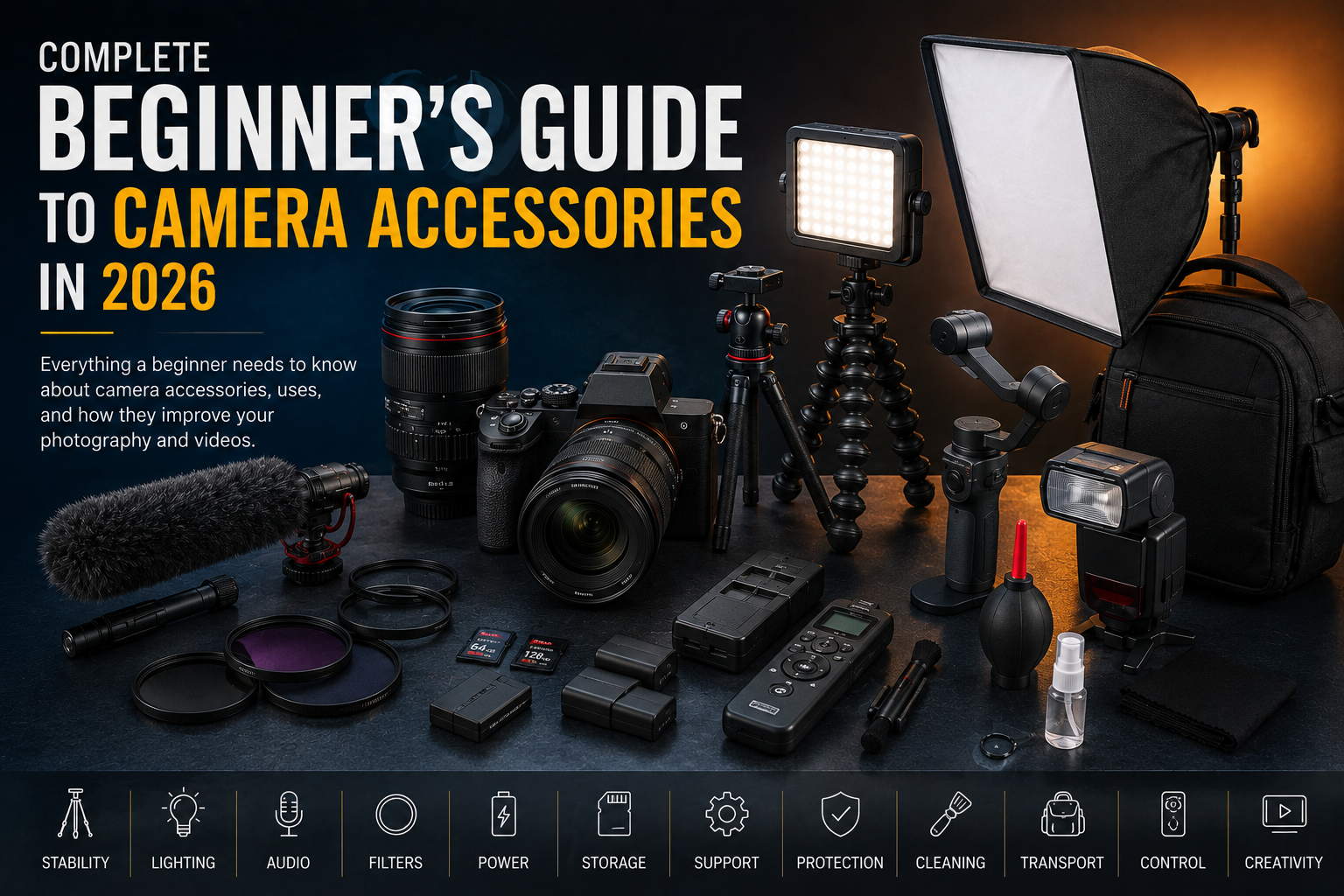
Photography has changed more in the last decade than it did in the previous fifty years. Cameras have become smarter, lighter, faster, and more accessible. Mobile phones now shoot cinematic videos. Mirrorless cameras dominate creator studios. YouTubers build professional setups from bedrooms. Wedding photographers deliver same-day edits. Instagram creators shoot product campaigns from home.
But despite all these changes, one thing has remained constant.
The camera alone is never enough.
The real difference between an average photograph and a professional result often comes from the accessories surrounding the camera. Lighting changes mood. Tripods improve sharpness. Audio equipment transforms video quality. Filters shape cinematic visuals. Stabilizers create smooth movement. Storage devices protect memories. Bags and cleaning kits preserve expensive gear for years.
This is where beginners often become confused.
Someone buying their first camera enters a world filled with unfamiliar names:
Tripods, monopods, softboxes, RGB lights, speedlights, gimbals, ND filters, reflectors, shotgun microphones, ball heads, light stands, trigger systems, cages, clamps, memory speeds, color temperatures, and dozens of other technical terms.
Most beginners either buy unnecessary products or ignore important accessories entirely.
That is exactly why this guide exists.
This article is designed to help beginners, hobbyists, creators, photographers, videographers, vloggers, and studio owners understand camera accessories properly in 2026. Whether you own a DSLR, mirrorless camera, action camera, or smartphone setup, this guide will help you understand which accessories matter, why they matter, and how they improve your work.
With more than 80 years connected to the photography and imaging industry, Digiphoto has seen the transformation from film cameras to digital imaging, from darkrooms to creator studios, and from traditional photography to AI-enhanced content production. That long-standing experience provides practical insight into what photographers truly need—not just what trends recommend.
This is not just a buying guide.
It is a complete educational handbook for modern photography accessories.
Why Camera Accessories Matter More Than Ever
Many beginners believe buying an expensive camera automatically guarantees professional results. In reality, professionals often create stunning images using mid-range cameras because they understand lighting, stability, sound, framing, and workflow.
Accessories solve practical problems.
A tripod eliminates blur during long exposure photography.
A ring light improves facial lighting during video calls or beauty shoots.
A softbox creates softer shadows for portraits.
An external microphone dramatically improves audio clarity for YouTube videos.
An ND filter helps filmmakers shoot cinematic footage outdoors.
A camera bag protects thousands of rupees worth of equipment from moisture, dust, and impact.
Accessories are not “extras.” They are tools that unlock the full potential of the camera.
In many cases, upgrading accessories gives better results than upgrading the camera body itself.
That is why photographers today invest strategically in supporting equipment.
Understanding the Main Categories of Camera Accessories
Before purchasing anything, beginners should understand the major categories of photography accessories.
These categories include:
- Camera support equipment
- Lighting equipment
- Audio equipment
- Lens accessories
- Power and storage accessories
- Camera protection accessories
- Video production accessories
- Mobile creator accessories
- Studio equipment
- Travel accessories
Each category serves a different purpose depending on the creator’s workflow.
Let us understand each one in detail.
Tripods: The Foundation of Stable Photography
One of the first accessories every photographer should own is a tripod.
A tripod stabilizes the camera and prevents motion blur. It also allows precise framing, long exposure photography, timelapses, astrophotography, studio shooting, product photography, and smooth video recording.
Why Beginners Need a Tripod
Many beginners underestimate how often camera shake ruins photographs.
Even slight hand movement can reduce sharpness.
Tripods become essential for:
- Low-light photography
- Night photography
- Product photography
- Group photos
- Landscape photography
- Video recording
- Reels and content creation
- Live streaming
- Zoom meetings
- YouTube production
Types of Tripods
Lightweight Travel Tripods
Ideal for:
- Travelers
- Vloggers
- Beginners
- Outdoor photography
Advantages:
- Portable
- Easy to carry
- Compact
Heavy-Duty Professional Tripods
Ideal for:
- Studio photography
- Wildlife photography
- Professional videography
Advantages:
- Higher stability
- Better load capacity
- Smooth movement
Mobile Tripods
Perfect for:
- Smartphone creators
- Reels
- Instagram videos
- TikTok creators
- Live streaming
Important Features to Check
When buying a tripod, beginners should evaluate:
- Maximum height
- Folded size
- Weight capacity
- Material quality
- Locking system
- Head type
- Stability
Cheap tripods often fail because of weak joints and unstable legs. Investing in durable tripod systems improves reliability significantly.
Lighting Equipment: The Real Secret Behind Professional Results
Ask any experienced photographer what matters most in photography, and many will say lighting.
Good lighting transforms average visuals into professional-quality images.
Poor lighting destroys detail, color accuracy, and mood.
Modern content creation heavily depends on controlled lighting setups.
Types of Photography Lights
LED Video Lights
LED lights are among the most popular accessories in 2026.
They are used for:
- YouTube videos
- Interviews
- Product shoots
- Reels
- Streaming
- Studio photography
Advantages:
- Low heat generation
- Adjustable brightness
- Portable design
- Energy efficiency
- Continuous lighting
Many modern LED systems also support RGB effects and app control.
Ring Lights
Ring lights became extremely popular because of beauty creators, streamers, and influencers.
They produce:
- Soft facial lighting
- Circular eye reflections
- Even illumination
Ring lights work well for:
- Makeup tutorials
- Video calls
- Reels
- Portrait content
- Live streaming
Softboxes
Softboxes diffuse light and create softer shadows.
They are commonly used for:
- Portrait photography
- Product photography
- Fashion shoots
- Studio photography
Softboxes create a more cinematic and professional look compared to harsh direct lighting.
RGB Lights
RGB lights allow creators to add colorful lighting effects to backgrounds and scenes.
They are popular among:
- Gaming streamers
- YouTubers
- Music creators
- Commercial videographers
External Flash Systems
Camera flashes help photographers control lighting in challenging conditions.
Built-in flashes are limited and often produce flat-looking images.
External flashes provide:
- More power
- Better bounce lighting
- Faster recycle times
- Wireless triggering
- Directional control
Common Uses of External Flashes
- Wedding photography
- Indoor events
- Portrait photography
- Fashion shoots
- Product photography
Professional photographers often combine flashes with softboxes, umbrellas, and reflectors.
Camera Microphones: Audio Matters More Than Video
Modern creators increasingly understand an important truth:
Audiences tolerate average video quality, but poor audio immediately drives viewers away.
That is why microphones are critical accessories.
Types of Microphones
Shotgun Microphones
Best for:
- Camera-mounted recording
- Interviews
- YouTube videos
Lavalier Microphones
Best for:
- Talking-head videos
- Online teaching
- Presentations
Wireless Microphones
Perfect for:
- Mobile creators
- Outdoor videos
- Wedding videography
Why Audio Equipment Matters
Clear audio improves:
- Viewer retention
- Professionalism
- Content quality
- Brand perception
For content creators, upgrading audio often gives faster improvement than upgrading cameras.
Camera Filters Explained
Filters attach to lenses and affect light entering the camera.
Many beginners ignore filters, but professionals use them extensively.
UV Filters
Purpose:
- Lens protection
- Dust prevention
- Minor UV reduction
CPL Filters (Circular Polarizers)
Purpose:
- Reduce reflections
- Improve sky contrast
- Enhance colors
Excellent for:
- Landscape photography
- Outdoor photography
ND Filters
ND filters reduce light entering the lens.
They are essential for:
- Cinematic video
- Long exposure photography
- Waterfall photography
ND filters allow creators to maintain cinematic shutter speeds even in bright sunlight.
Camera Bags: Protecting Expensive Equipment
Camera equipment is expensive and delicate.
A proper camera bag is essential for:
- Safety
- Organization
- Travel convenience
Types of Camera Bags
Backpack Style
Best for:
- Travel photographers
- Outdoor shoots
Sling Bags
Best for:
- Street photography
- Quick access
Hard Cases
Best for:
- Professional transportation
- Airline travel
Important features include:
- Waterproof material
- Padded compartments
- Shock protection
- Weather resistance
Memory Cards and Storage Solutions
One of the biggest mistakes beginners make is buying low-quality memory cards.
Slow or unreliable cards can cause:
- Recording failures
- Data corruption
- Slow transfer speeds
- Video interruptions
Important Factors
Speed Ratings
Critical for:
- 4K video
- Burst photography
- High-resolution recording
Storage Capacity
Modern creators often require:
- 128GB
- 256GB
- 512GB
Especially for video production.
Backup Storage
Professional workflows require backups.
Popular backup options include:
- Portable SSDs
- External hard drives
- Cloud storage
Data protection is essential because lost content often cannot be recreated.
Batteries and Power Accessories
Battery anxiety is real for photographers and creators.
Extra batteries are essential during:
- Weddings
- Events
- Travel shoots
- Outdoor filming
Useful Power Accessories
- Spare batteries
- Dual chargers
- Power banks
- Dummy batteries
- USB-C charging systems
Modern mirrorless cameras consume significant power during video recording, making backup power crucial.
Gimbals and Stabilizers
Shaky footage immediately appears unprofessional.
Gimbals help creators achieve smooth cinematic motion.
Common Uses
- Walking shots
- Travel videos
- Wedding films
- Reels
- Real estate videos
Types
Smartphone Gimbals
Ideal for mobile creators.
Camera Gimbals
Used by professional filmmakers.
Stabilized footage dramatically improves production quality.
Mobile Photography Accessories
Smartphone creators now represent one of the fastest-growing creator segments.
Modern mobile accessories include:
- Mobile cages
- Clip-on lights
- Wireless microphones
- Mobile tripods
- Smartphone gimbals
- Lens attachments
Many creators build full businesses using only smartphone setups.
Home Studio Equipment
The creator economy has created massive demand for home studios.
A basic home studio may include:
- LED lights
- Softboxes
- Tripods
- Backdrops
- Microphones
- Light stands
Creators today produce:
- Podcasts
- Courses
- Product shoots
- Live streams
- Social media videos
All from home environments.
Accessories for Wedding Photographers
Wedding photography requires specialized accessories because conditions change rapidly.
Essential wedding photography accessories include:
- External flashes
- Fast memory cards
- Backup batteries
- Dual camera straps
- LED lights
- Stabilizers
- Lens cleaning kits
Wedding professionals prioritize reliability because moments cannot be repeated.
Accessories for Product Photography
Product photography demands precision.
Important accessories include:
- Light tents
- Softboxes
- Macro lenses
- Turntables
- Reflectors
- Overhead rigs
E-commerce growth has significantly increased demand for product photography equipment.
Camera Cleaning Accessories
Dust, fingerprints, and moisture damage image quality.
Essential cleaning accessories include:
- Air blowers
- Lens cloths
- Sensor cleaning kits
- Cleaning fluids
- Protective cases
Regular maintenance extends equipment lifespan.
Beginner Mistakes When Buying Camera Accessories
Buying Cheap Unreliable Products
Low-quality accessories often fail quickly.
Ignoring Lighting
Many spend heavily on cameras while neglecting lighting.
Purchasing Everything at Once
Beginners should build setups gradually.
Ignoring Compatibility
Not all accessories work with all cameras.
Overlooking Audio
Poor sound ruins otherwise excellent videos.
The Rise of Content Creators and Creator Accessories
The creator economy continues expanding rapidly.
Modern creators need:
- Portable lighting
- Wireless microphones
- Compact tripods
- Smartphone rigs
- Streaming accessories
Photography accessories are no longer limited to photographers.
They now support:
- Educators
- Gamers
- Influencers
- Businesses
- Online coaches
- E-commerce sellers
Why Trusted Brands Matter
Reliable accessories protect expensive equipment and improve long-term consistency.
Trusted brands typically offer:
- Better durability
- Better compatibility
- Better after-sales support
- Higher reliability
In professional photography, equipment failure can damage client trust and business reputation.
That is why professionals prioritize quality over the lowest possible price.
How Photography Accessories Have Changed in 2026
The industry has evolved dramatically.
Modern trends include:
- USB-C charging
- Wireless control
- AI-powered tracking
- App-controlled lighting
- Portable creator kits
- Compact travel setups
- RGB cinematic lighting
- Smartphone-first accessories
Content creation today requires flexibility and mobility.
Accessories continue adapting to those needs.
Building Your First Photography Setup
A beginner does not need to purchase everything immediately.
A smart starter setup may include:
- Tripod
- LED light
- Memory card
- Camera bag
- Extra battery
- Cleaning kit
As skills grow, creators can expand into:
- Audio systems
- Advanced lighting
- Stabilizers
- Professional studio setups
Photography is a journey built over time.
Why Educational Buying Matters
The internet is filled with aggressive marketing.
But professional creators make decisions based on:
- Workflow needs
- Shooting style
- Reliability
- Compatibility
- Long-term value
Understanding equipment before purchasing leads to smarter investments.
That is why educational content matters.
A creator who understands lighting and stability will consistently outperform someone who only owns expensive cameras.
The Future of Photography Accessories
The future will likely include:
- AI-assisted lighting systems
- Smarter stabilization
- Cloud-connected workflows
- Portable production ecosystems
- Advanced wireless ecosystems
But one thing will remain unchanged.
Creators will always need tools that help them tell stories visually.
That is the true purpose of camera accessories.
Final Thoughts
Photography is no longer limited to professionals with expensive studios.
Today, anyone can become a creator.
But great content still depends on understanding the tools behind the camera.
The right accessories improve:
- Image quality
- Video quality
- Workflow efficiency
- Production value
- Creative freedom
For beginners, the goal should not be buying the most expensive gear.
The goal should be understanding what each tool does and how it supports creativity.
That knowledge builds confidence.
And confidence creates better work.
With decades of experience connected to photography equipment, creator tools, and imaging technology, Digiphoto continues supporting photographers, creators, videographers, and storytellers across generations by helping them choose practical, reliable, and performance-focused equipment for modern creative workflows.
Frequently Asked Questions
1. What are the most important camera accessories for beginners?
The most important beginner accessories include a tripod, memory card, extra battery, camera bag, LED light, and cleaning kit.
2. Which is better for beginners: DSLR or mirrorless accessories?
Most accessories are compatible with both systems, but mirrorless setups often focus more on compact and lightweight gear.
3. Do I need an external flash if my camera already has one?
Yes. External flashes provide more power, better lighting control, and professional-quality results.
4. Why is lighting so important in photography?
Lighting affects exposure, mood, detail, color accuracy, and image quality more than the camera body itself.
5. Which tripod is best for mobile content creators?
Lightweight mobile tripods with adjustable heads and smartphone mounts work best for creators.
6. What is the purpose of an ND filter?
ND filters reduce incoming light, helping filmmakers maintain cinematic shutter speeds and enabling long exposure photography.
7. Are ring lights good for photography?
Ring lights are excellent for beauty content, portraits, video calls, and social media videos because they create soft, even lighting.
8. How many batteries should photographers carry?
Professionals usually carry at least two to four backup batteries depending on shoot duration.
9. Why do photographers use softboxes?
Softboxes diffuse light and reduce harsh shadows, creating softer and more flattering lighting.
10. Are smartphone accessories worth buying for creators?
Yes. Modern mobile creator accessories significantly improve video quality, stability, audio, and lighting.
11. How do I protect my camera while traveling?
Use padded camera bags, waterproof covers, lens caps, silica gel packs, and hard protective cases.
12. Which microphone is best for YouTube beginners?
Wireless lavalier microphones or compact shotgun microphones are excellent starting choices.
13. Why are memory card speeds important?
Fast memory cards support high-resolution photography and smooth 4K or 8K video recording.
14. What is the difference between LED lights and flashes?
LED lights provide continuous lighting, while flashes emit powerful bursts of light during image capture.
15. Should beginners buy expensive accessories immediately?
No. Beginners should start with essential accessories and upgrade gradually based on their needs and shooting style.