

Best Tripods for Photography and Video Shooting in India in 2026

Best Tripods for Photography and Video Shooting in India in 2026
Every photographer remembers the moment they first realized that camera shake was ruining their work.
It usually happens during a beautiful sunset photograph, a low-light portrait, a long exposure image, or an important video recording. The composition looks perfect on the camera screen, the lighting feels right, the framing appears professional, but once the image is viewed properly later, the disappointment becomes obvious. The photograph lacks sharpness. The video shakes during movement. Tiny vibrations destroy what could have been a stunning result.
Most beginners blame the camera.
Professionals know the truth.
The problem is usually stability.
That is why a tripod remains one of the most important investments any creator can make. It is not simply a stand for holding the camera. It is the foundation that supports image quality, composition accuracy, creative flexibility, workflow efficiency, and professional consistency.
A good tripod allows photographers to shoot in situations where handheld photography becomes unreliable. It creates stability during low-light conditions, supports smooth cinematic video movement, enables precise framing for product photography, improves long exposure images, and allows creators to work comfortably for extended shooting sessions.
In modern content creation, tripods are no longer limited to photographers alone.
Today, they are used by:
- YouTubers
- Filmmakers
- Instagram creators
- Live streamers
- Wedding videographers
- Product photographers
- Podcasters
- Online educators
- Businesses creating social media content
- Smartphone creators
- Travel vloggers
The modern creator economy has transformed tripods from optional accessories into essential production equipment.
Yet many people still purchase them incorrectly.
Some buy extremely cheap tripods that become unstable after a few weeks. Others purchase heavy professional systems that they never enjoy carrying. Some creators buy travel tripods that cannot support their lenses properly. Many ignore important details like head movement, locking systems, height, weight distribution, and load capacity.
Choosing the right tripod requires understanding how photography actually works in real-world situations.
This guide explains everything creators need to know about selecting the best tripods for photography and video shooting in India in 2026. It explores tripod types, materials, use cases, creator workflows, common buying mistakes, professional shooting scenarios, and how modern content creators can build efficient setups without wasting money.
With more than 80 years connected to photography equipment and creator workflows, Digiphoto understands that the best tripod is not necessarily the most expensive one. The best tripod is the one that fits the creator’s actual shooting style, production requirements, travel habits, and creative goals.
That understanding is what separates smart equipment decisions from expensive mistakes.
Why Tripods Matter More Than Ever in 2026
Photography has changed dramatically over the last decade.
Modern cameras now offer:
- Higher megapixel sensors
- 4K and 8K video recording
- Advanced autofocus
- Cinematic frame rates
- AI-powered stabilization
- Professional smartphone cameras
Yet despite these technological improvements, stability remains one of the biggest factors affecting image quality.
High-resolution sensors capture incredible detail, but they also expose even tiny vibrations more clearly than older cameras did.
This means modern cameras demand even better stability than before.
At the same time, content creation itself has evolved.
Creators today are expected to produce:
- Vertical videos
- Cinematic footage
- Timelapses
- Tutorials
- Product videos
- Podcasts
- Streaming setups
- Reels
- YouTube videos
- Social media campaigns
All these workflows depend heavily on proper camera support.
A tripod is no longer just a photography tool.
It is now part of the entire digital content production ecosystem.
The Biggest Mistake Beginners Make When Buying a Tripod
Many beginners believe all tripods are essentially the same.
This assumption leads to disappointment very quickly.
The market is flooded with extremely cheap tripods that look attractive online because they promise:
- Lightweight design
- Adjustable height
- Affordable pricing
But after real-world use, problems begin appearing:
- Wobbling legs
- Weak locking systems
- Poor stability
- Plastic joints breaking
- Loose head movement
- Camera tilting unexpectedly
These issues become frustrating during actual shoots.
A tripod should create confidence.
It should allow the creator to focus on creativity instead of worrying whether the camera will remain stable.
That reliability matters enormously during professional shoots, weddings, commercial projects, or client work.
Professional creators understand that a good tripod is a long-term investment.
Many photographers use quality tripods for years.
Understanding Different Types of Tripods
Not every tripod is designed for the same purpose.
Different creators require different support systems depending on their workflow.
Understanding those differences helps photographers make smarter decisions.
Travel Tripods
Travel tripods became extremely popular because modern creators prioritize portability.
These tripods are designed for:
- Travel photography
- Outdoor shooting
- Lightweight mirrorless setups
- Vlogging
- Mobile filmmaking
They typically feature:
- Foldable compact design
- Reduced weight
- Smaller packed size
Travel photographers often carry equipment for long hours through airports, cities, mountains, or outdoor locations. A bulky heavy tripod quickly becomes exhausting.
That is why portability matters.
However, lightweight designs must still provide stability.
A tripod that shakes in wind conditions or struggles under camera weight defeats its purpose entirely.
Modern travel tripods attempt to balance portability with strength.
Professional Heavy-Duty Tripods
Some photography styles require maximum stability rather than portability.
Professional tripods are commonly used for:
- Wildlife photography
- Studio photography
- Commercial shoots
- Long telephoto lenses
- Video production
- Architectural photography
These tripods are usually:
- Heavier
- More durable
- Built with stronger materials
- Designed for higher load capacities
Professional systems often prioritize vibration control because even small movement can affect sharpness when using large telephoto lenses or shooting long exposures.
Video Tripods
Video shooting requires very different movement compared to photography.
Photographers mainly need stability.
Videographers need controlled movement.
That is why video tripods often use fluid heads.
Fluid heads create smoother:
- Panning
- Tilting
- Camera movement
Without fluid movement, video footage appears jerky and amateur.
Modern content creators increasingly shoot both photo and video. Because of this, hybrid tripods supporting both workflows have become extremely popular.
Smartphone Tripods
The rise of mobile content creation completely changed the tripod market.
Smartphone creators now produce:
- Instagram reels
- Travel videos
- Tutorials
- Podcasts
- Product videos
- YouTube shorts
- Live streams
Modern mobile tripods often include:
- Phone mounts
- Bluetooth controls
- Flexible positioning
- Compact portability
Many smartphone creators build entire businesses around mobile production systems.
The demand for lightweight portable support equipment continues growing rapidly.
Carbon Fiber vs Aluminum Tripods
One of the biggest decisions photographers face involves tripod material.
The two most common options are:
- Aluminum
- Carbon fiber
Both have advantages depending on shooting style.
Aluminum Tripods
Aluminum tripods are popular because they are:
- More affordable
- Durable
- Reliable
They work well for:
- Studio setups
- Indoor shoots
- Budget-conscious creators
However, aluminum tripods are generally heavier.
For photographers frequently traveling or hiking, that additional weight becomes noticeable over time.
Carbon Fiber Tripods
Carbon fiber tripods are significantly lighter while maintaining strong stability.
This makes them excellent for:
- Travel photographers
- Outdoor creators
- Wildlife shooters
- Frequent travelers
They also reduce vibration effectively.
The downside is cost.
Carbon fiber systems are usually more expensive, but many professionals consider the investment worthwhile because portability directly affects shooting comfort.
Why Tripod Heads Matter More Than Most Beginners Realize
The tripod legs support the equipment.
The tripod head controls movement.
Many beginners focus entirely on tripod height while ignoring head quality completely.
That is a major mistake.
Ball Heads
Ball heads are highly popular because they allow fast positioning.
Photographers can quickly:
- Tilt
- Rotate
- Reframe
This flexibility works well for:
- Travel photography
- Street photography
- General photography
Fluid Heads
Fluid heads are designed primarily for video work.
They create smoother movement during:
- Panning shots
- Tilting shots
- Cinematic motion
Video creators heavily depend on fluid heads for professional-looking footage.
Geared Heads
These heads prioritize precision.
Product photographers and studio photographers often use geared systems because they allow tiny controlled adjustments.
How Tripods Improve Photography Quality
Many beginners think tripods are only necessary for long exposure photography.
In reality, tripods improve quality in many situations.
Low-Light Photography
When light levels drop, shutter speeds become slower.
Slower shutter speeds increase motion blur risk.
A tripod eliminates that problem.
This is especially important during:
- Indoor photography
- Event photography
- Night photography
- Restaurant photography
- Architectural photography
Landscape Photography
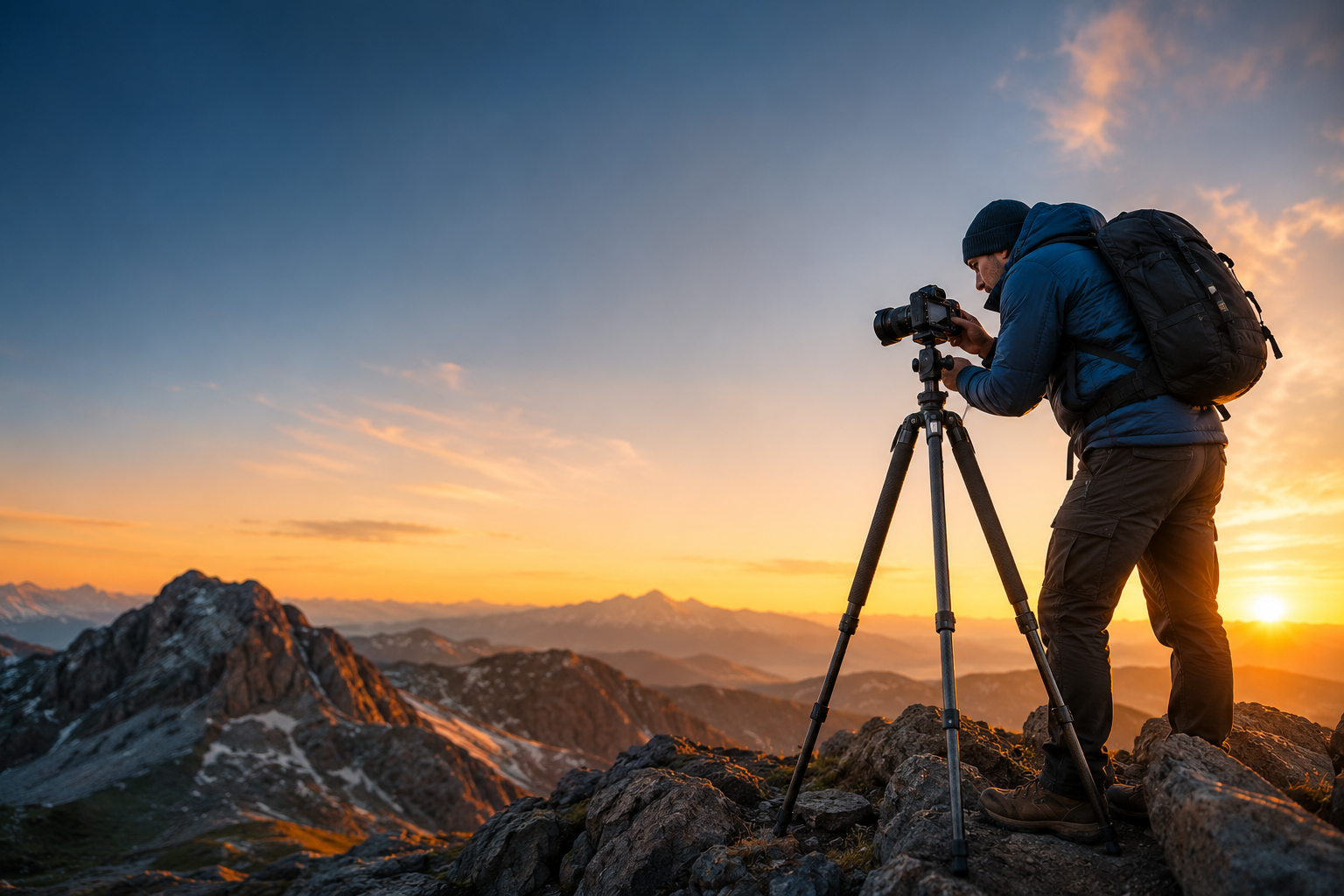
Landscape photographers often shoot during sunrise and sunset.
Lighting conditions are beautiful but frequently dim.
Tripods allow:
- Lower ISO settings
- Better image quality
- Sharper details
Landscape photography also benefits from careful composition, which becomes easier when the camera remains stable.
Product Photography
Product photography demands precision.
Even tiny framing changes matter.
Tripods help maintain:
- Consistent composition
- Controlled angles
- Stable lighting alignment
This becomes extremely important for e-commerce photography.
Long Exposure Photography
Some of the most visually dramatic photography styles require long exposures.
Examples include:
- Waterfalls
- City lights
- Light trails
- Night skies
Without a tripod, these photographs become impossible.
Why Video Creators Depend on Tripods
Video production has become one of the largest driving forces behind tripod demand.
Shaky footage immediately feels unprofessional.
Stable footage feels intentional and cinematic.
Tripods improve:
- Interview videos
- Tutorials
- Podcasts
- Product showcases
- Streaming setups
- Corporate videos
Creators who shoot alone especially depend heavily on tripods because they often manage:
- Framing
- Focus
- Lighting
- Audio
- Presentation
Simultaneously.
The Rise of Vertical Video and Modern Tripod Design
Social media platforms changed content creation dramatically.
Vertical video now dominates:
- Instagram reels
- YouTube shorts
- TikTok
- Social media advertising
Tripod manufacturers adapted accordingly.
Modern systems increasingly support:
- Vertical mounting
- Mobile shooting
- Compact creator setups
Creators today need flexibility across multiple platforms.
Common Problems With Cheap Tripods
Very cheap tripods usually create long-term frustration.
Common issues include:
- Weak locking systems
- Camera wobbling
- Limited load capacity
- Poor durability
- Plastic breakage
- Unstable center columns
Many creators eventually replace extremely cheap tripods after realizing they affect workflow negatively.
Reliable support equipment improves shooting confidence significantly.
How to Choose the Right Tripod Height
Height matters more than most beginners realize.
A tripod that forces uncomfortable posture creates fatigue during long shoots.
Creators should ideally choose tripods that allow comfortable eye-level shooting without excessive bending.
At the same time, taller tripods must still remain stable.
Balance matters.
Why Weight Capacity Is Important
Every tripod has a maximum load capacity.
That capacity includes:
- Camera body
- Lens weight
- Accessories
- Microphones
- External monitors
Many beginners underestimate total setup weight.
A tripod operating near its maximum limit becomes less stable.
Professionals usually prefer extra capacity for better reliability.
Tripods for Wedding Photography
Wedding photographers work in fast-changing environments.
They often move between:
- Outdoor shoots
- Indoor stages
- Dance floors
- Ceremonies
- Portrait sessions
This requires tripods that balance:
- Portability
- Speed
- Stability
Wedding videographers especially depend on smooth movement systems for cinematic footage.
Tripods for YouTube and Creator Studios
Modern creator studios heavily rely on tripods.
Creators often use them for:
- Overhead shooting
- Face-to-camera videos
- Product reviews
- Podcast recording
- Streaming setups
The creator economy transformed tripods into permanent studio equipment rather than occasional accessories.
Why Good Tripods Last for Years
Unlike cameras, which evolve rapidly, good tripods remain useful for long periods.
Many photographers use the same support systems for:
- Five years
- Ten years
- Even longer
That is why quality matters.
Reliable support equipment becomes part of the creator’s long-term workflow.
The Future of Tripod Design
Modern tripod technology continues evolving.
Current trends include:
- Lighter materials
- Faster locking systems
- Modular designs
- Smartphone integration
- Compact travel engineering
As creators continue demanding portability and hybrid workflows, tripod systems will continue adapting accordingly.
But one thing will never change.
Photography will always require stability.
Final Thoughts
A tripod may not feel as exciting as a new camera or lens.
But it is one of the most valuable tools any creator can own.
It improves:
- Image sharpness
- Video quality
- Shooting comfort
- Workflow efficiency
- Creative possibilities
The right tripod allows creators to work confidently in situations where handheld shooting becomes unreliable.
More importantly, it helps creators focus on storytelling rather than technical limitations.
That is the real purpose of professional support equipment.
Modern photography and content creation continue evolving rapidly, but stability remains timeless.
Whether someone shoots weddings, YouTube videos, travel photography, commercial projects, podcasts, or smartphone content, investing in the right tripod creates a stronger creative foundation for years ahead.
With decades connected to photography equipment, creator workflows, studio setups, and imaging technology, Digiphoto continues supporting photographers and creators by helping them choose reliable tools designed for real-world shooting environments and modern content production needs.
Frequently Asked Questions
1. Why is a tripod important for photography?
A tripod provides stability, reduces camera shake, improves sharpness, and allows photographers to shoot in low-light situations more effectively.
2. Which tripod is best for beginners?
Beginners should look for a stable and reliable tripod that balances affordability, durability, portability, and ease of use rather than choosing the cheapest available option.
3. Are lightweight tripods good for professional photography?
Yes, many modern lightweight tripods offer excellent stability and are especially useful for travel photographers and content creators who need portability.
4. What is the difference between a photography tripod and a video tripod?
Photography tripods prioritize stability and framing flexibility, while video tripods often include fluid heads for smoother movement during recording.
5. Are carbon fiber tripods worth the extra cost?
For frequent travelers and outdoor photographers, carbon fiber tripods are often worth the investment because they reduce carrying weight significantly while maintaining strong stability.
6. Can smartphone creators benefit from tripods?
Absolutely. Smartphone creators use tripods for reels, YouTube videos, streaming, tutorials, podcasts, and professional-looking social media content.
7. Why do cheap tripods fail quickly?
Cheap tripods often use weak materials, unstable joints, poor locking systems, and low-quality plastic components that wear out rapidly.
8. What is a fluid head tripod?
A fluid head tripod uses specialized movement control systems that create smooth panning and tilting during video recording.
9. How much weight should a tripod support?
A tripod should comfortably support the total weight of the camera, lens, and accessories while maintaining extra capacity for stability.
10. Why do professional photographers still use tripods with modern cameras?
Even advanced cameras benefit from stability during low-light photography, long exposures, product photography, video production, and precision framing.
11. Is tripod height important?
Yes. A tripod should allow comfortable shooting posture while maintaining strong stability.
12. What type of tripod is best for travel photography?
Travel photographers usually prefer compact and lightweight tripods that fold easily while still offering strong support.
13. Are tripods useful for indoor content creation?
Yes. Tripods are heavily used in studios, podcasts, YouTube setups, product shoots, streaming environments, and home creator spaces.
14. Can one tripod work for both photography and video?
Many modern hybrid tripods support both photography and video workflows, especially when paired with versatile heads.
15. How long does a good tripod last?
A high-quality tripod can remain reliable for many years when properly maintained and used carefully.